Can you remember all the times Caleb’s Three Pence coin plays a part in Caleb and the Incredible Counting Machine? It first appears in Caleb’s garden, but later on comes in very handy in Prince John’s castle… But what is a Three Pence?
Did you know that when your grandparents were children, they had a completely different system of money? It was known as pounds, shillings and pence (or pennies).

Amazingly, pounds and pennies have been in use since the time of Prince John, right through to 1971 – that’s over 900 years!
Originally a pound was defined as a pound in weight of silver (we had an old system of weights back then too!) There were 240 silver pennies to a pound. In those days, it was mostly these pennies that were in circulation, which is why if you see a photo of a pile of silver coins that someone has found, they are all pretty much identical!

As time went on more coins were introduced to save you having to carry hundreds of silver coins with you (imagine doing all your shopping with 10p coins!). The shilling was introduced in 1503 by Henry VII. One shilling was equal to 12 pennies, so that meant a lot fewer coins in your pocket – great idea Henry!
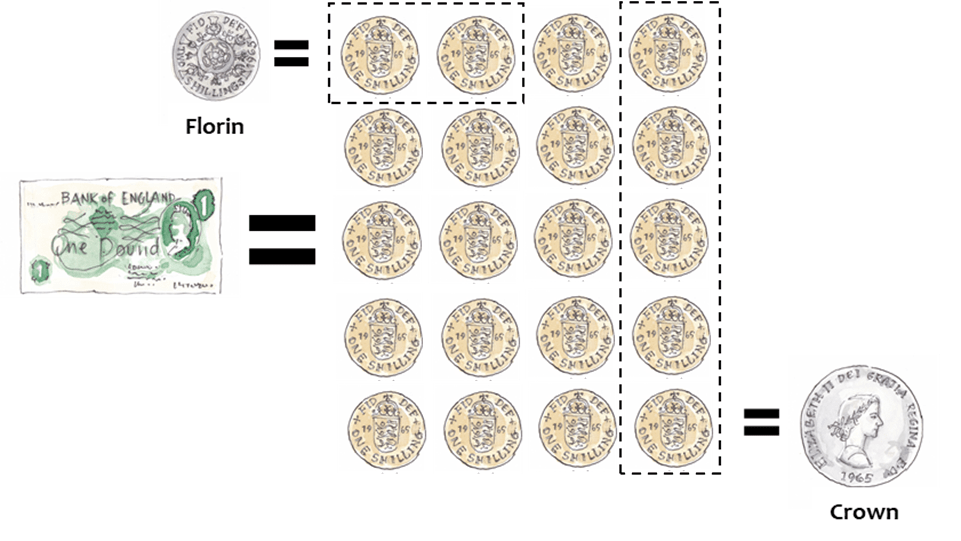
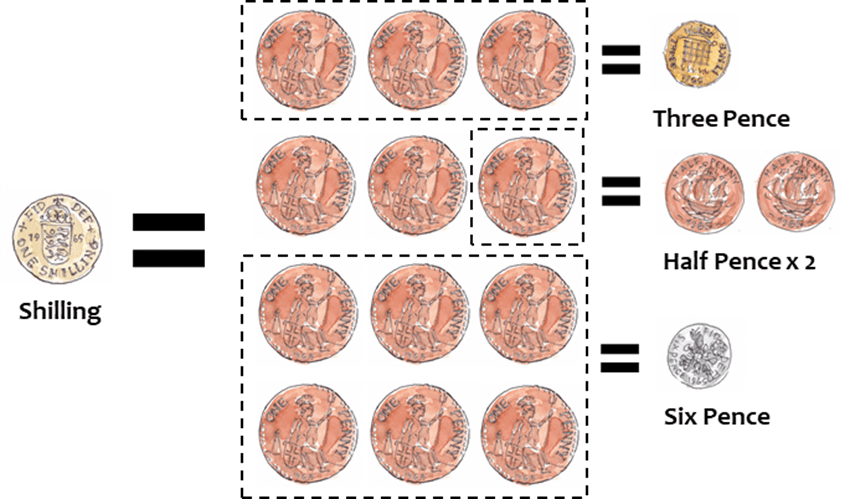
To make things even more confusing, the coins all had nicknames! The shilling was called a “bob”, sixpence a “tanner” and the Three Pence a “thrupenny”.
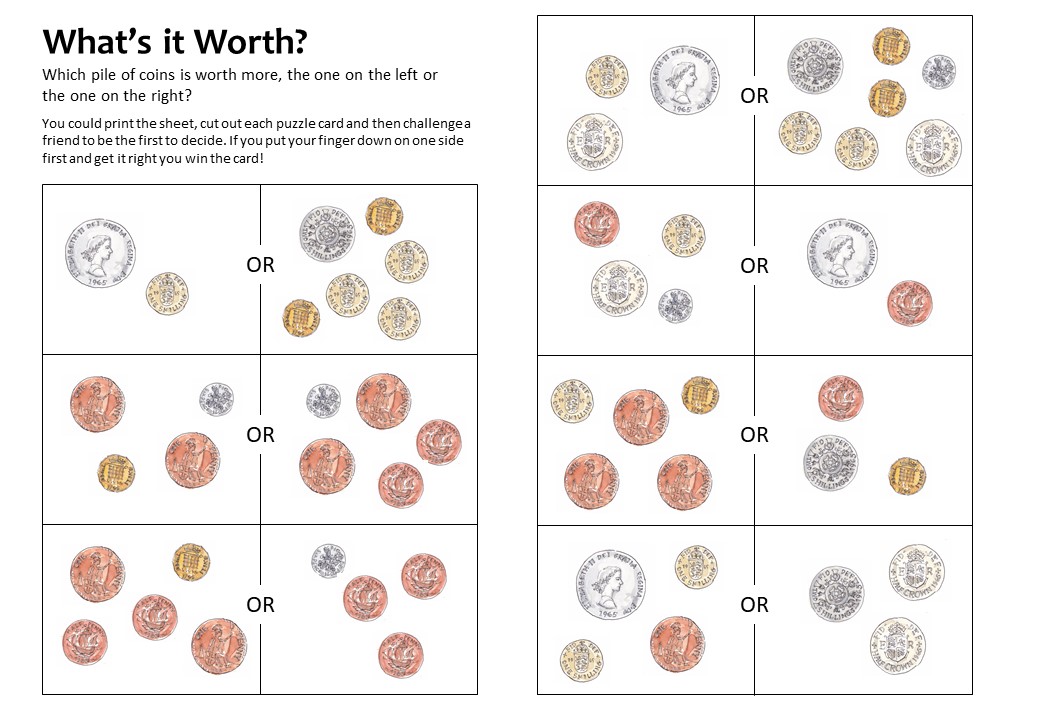
Activity 1 – What’s it Worth?
Do you think you think you can remember what each coin is? Put yourself to the test with this quick challenge, where you have to figure out which of two piles of coins is worth more. Can you beat a friend to get it right first?
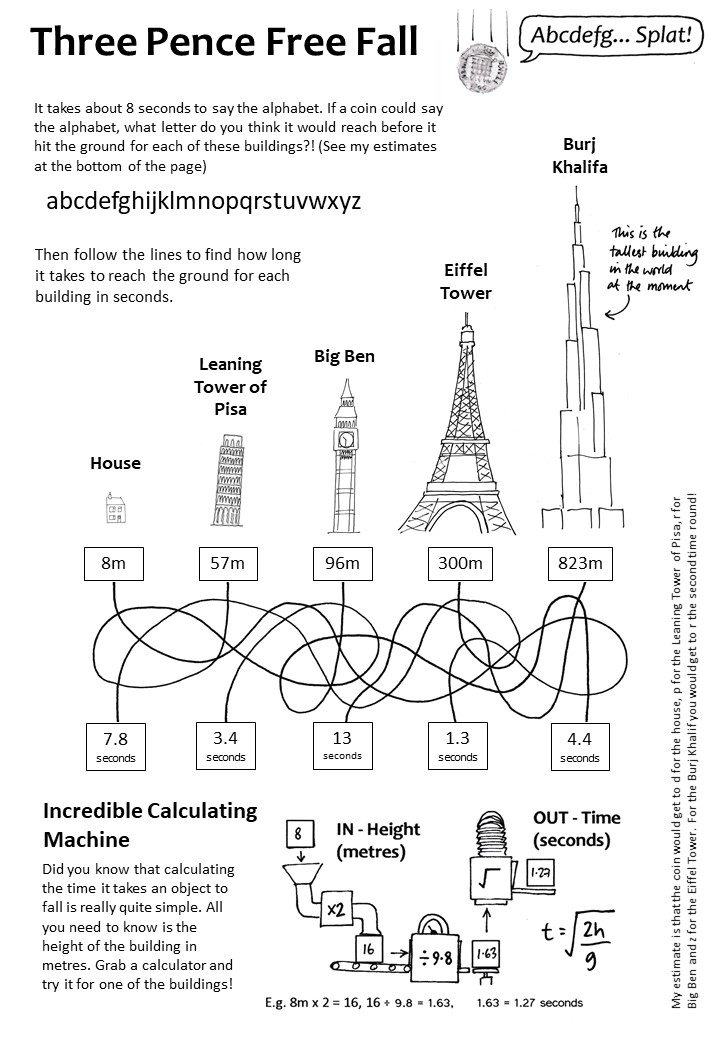
Activity 2 – Three Pence Free Fall
Say that three times quickly if you can!
You will remember that Caleb’s Three Pence helps to save them from the dungeon when Ignatius agrees to try Uncle Bill’s experiment of dropping the coin and Caleb’s lump of fool’s gold to see which lands first. Which do you think it would be?
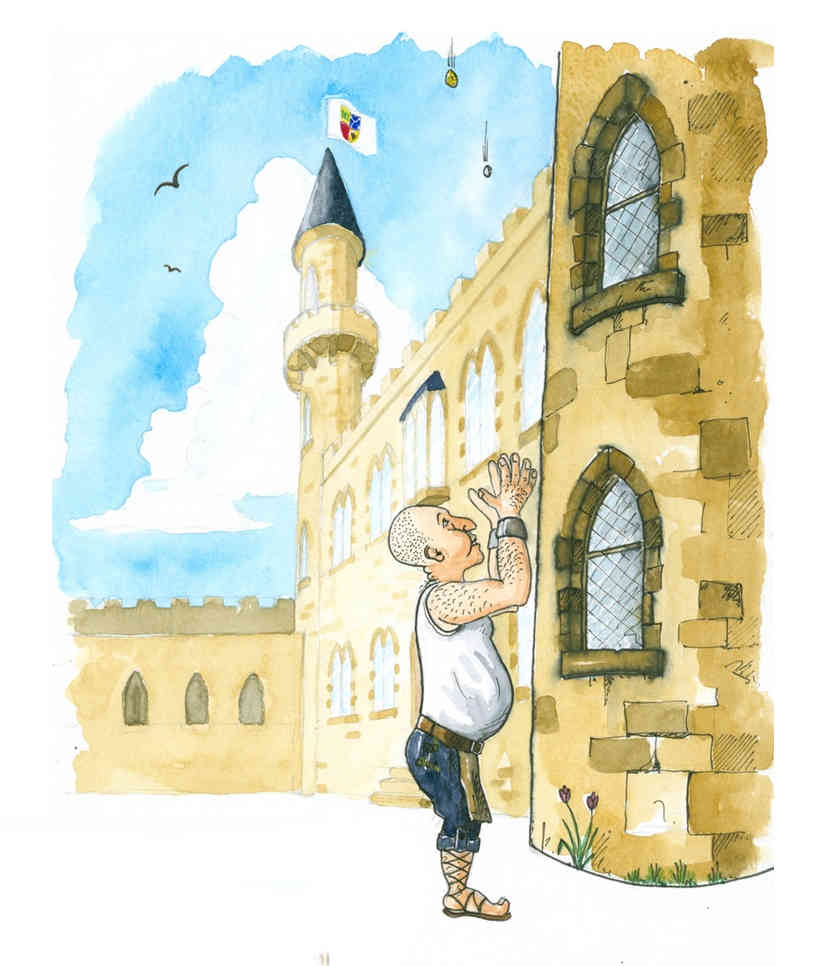
It’s a trick question… They would land almost at the same time!
The famous philosopher Galileo (1564-1642) was one of the first people to explain that two items of different weights would fall at the same speed (assuming there isn’t any air).
This was famously demonstrated on the moon when astronaut David Scott dropped a hammer and a feather and they both landed at the same time! (On the earth, the air does slow objects down depending on their shape and weight.)
Activity 3 – In the Corner Game
You can also try the game that Caleb, Ashley and Grandpa played in the dungeon…
All you need to do is stand a fixed distance from a wall and flick a coin and see how close to the corner (where the wall meets the floor) that you can get it to land. Simple as that!
If you are outside, you could draw a series of lines with chalk, so you get further and further away. If you play with a friend, see who does best out of three coins for each distance.
 Caleb and the Inventions